What Is an ETF?
The investment that changed everything — and why millions of people swear by them.
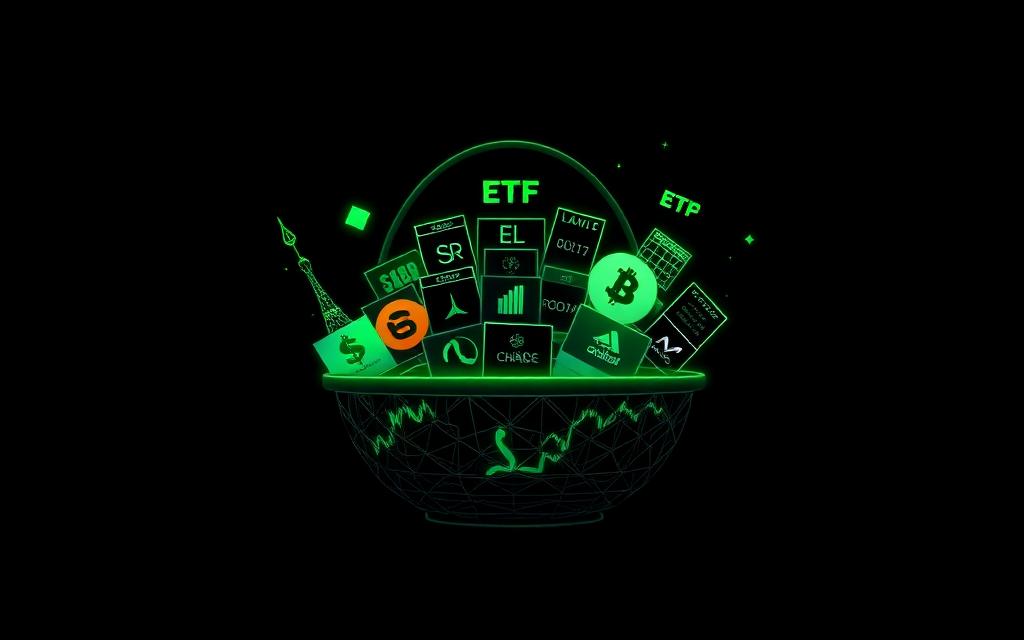
If there's one investment concept every young investor needs to understand before anything else, it's this one. ETFs — exchange traded funds — have quietly become the most powerful wealth-building tool available to everyday investors. They're simple, low-cost, and backed by decades of evidence. And yet most people still don't fully understand what they are or why they matter.
By the end of this article, you will.
The Simple Explanation
An ETF is a single investment that holds a collection of assets — typically stocks, bonds, or commodities — and trades on a stock exchange just like a regular share.
When you buy one share of an ETF, you're instantly buying a tiny piece of every single asset inside it. A global share ETF might hold thousands of companies across dozens of countries — all in one purchase, for the price of a single share.
Think of it like this: instead of buying one apple, you buy a fruit basket. If one apple goes bad, the rest of the basket is fine. That's diversification — and it's the most fundamental principle of smart investing.
How ETFs Actually Work
Most ETFs are designed to track an index — a predetermined list of assets that follows a specific market or sector.
The S&P 500 index, for example, tracks the 500 largest companies listed in the United States. An S&P 500 ETF simply buys all 500 of those companies in proportion to their size. When Apple grows and becomes a bigger part of the index, the ETF automatically holds more Apple. When a company shrinks or gets removed, the ETF adjusts accordingly.
You're not paying a fund manager to pick stocks. You're not betting on one company outperforming another. You're simply owning the market — and historically, owning the market has beaten the vast majority of professional stock pickers over the long term.
Why ETFs Changed Investing Forever
Before ETFs existed, investing was expensive and complicated. Mutual funds charged high fees. Buying individual stocks required significant capital and knowledge. Diversification was a luxury for the wealthy.
ETFs democratised investing. Suddenly anyone — regardless of income, background or experience — could own a piece of thousands of the world's best companies for a few dollars and a management fee as low as 0.03% per year.
That's not a typo. Some of the world's best ETFs charge less than $3 per year on every $10,000 invested. Compare that to a traditional managed fund charging 1-2% annually and the difference over a lifetime of investing is extraordinary.
The Different Types of ETFs
Not all ETFs are the same. Here are the main categories every investor should know:
Index ETFs
The most common type. Tracks a market index like the S&P 500, a total world market index, or a local market index. Broad, diversified, low-cost. The foundation of most smart portfolios.
Sector ETFs
Tracks a specific industry — technology, healthcare, energy, financials. Higher risk than broad market ETFs but useful for investors who want targeted exposure to a particular sector.
Bond ETFs
Holds a collection of bonds rather than stocks. Lower risk and lower return than share ETFs. Often used to add stability to a portfolio, particularly as investors get older.
Commodity ETFs
Tracks the price of physical commodities like gold, silver, or oil. Used as a hedge against inflation or market volatility.
Thematic ETFs
Focuses on a specific theme or trend — clean energy, artificial intelligence, cybersecurity, emerging markets. Higher risk, higher potential reward, and often higher fees. Best approached with caution.
For most investors — especially beginners — broad index ETFs are all you need. Everything else is optional.
ETFs vs Individual Stocks
This is one of the most common questions new investors ask. Should I buy ETFs or individual stocks?
The honest answer is that for most people, ETFs should form the core of any portfolio. Here's why:
When you buy an individual stock you're betting that one specific company will perform well. No matter how much research you do, you're exposed to risks that no amount of analysis can predict — a CEO scandal, a product failure, a competitor nobody saw coming.
When you buy an index ETF you're betting that the global economy will be larger in 20 years than it is today. That's a bet that has never lost over any meaningful long-term period in history.
Individual stocks can absolutely have a place in a portfolio for experienced investors who enjoy the research and can stomach the volatility. But they should never replace a diversified ETF foundation.
The Real Cost of an ETF
Every ETF charges a management expense ratio — the MER — which is the annual fee deducted from the fund's value. It's expressed as a percentage and comes out automatically without you doing anything.
A broad index ETF typically charges between 0.03% and 0.20% per year. On a $10,000 investment that's between $3 and $20 annually. Negligible.
Compare this to actively managed funds which often charge 0.75% to 1.5% annually. The difference sounds small but compounds dramatically over time. On a $500,000 portfolio the difference between a 0.10% ETF and a 1.00% managed fund is $4,500 every single year — money that would otherwise be compounding in your favour.
Always check the MER before investing in any fund. It's one of the most important numbers in investing.
How to Actually Buy an ETF
Buying an ETF is no different to buying a regular share. You need a brokerage account — an online platform that lets you buy and sell investments.
Once your account is set up and funded you simply search for the ETF by its ticker code — a short series of letters that identifies it — and place a buy order for however many shares you want to purchase.
The whole process takes minutes. And once you've bought it, the ETF does all the work — automatically rebalancing, reinvesting dividends where applicable, and tracking its index without you needing to do a thing.
Why ETFs Are the Starting Point for Almost Every Investor
Warren Buffett — widely considered the greatest investor in history — has repeatedly said that for most people, a low-cost index ETF is the single best investment they can make. He's instructed that when he dies, 90% of the money he leaves behind should be put into a low-cost S&P 500 index fund.
If the best investor alive recommends index ETFs for everyday people, that's worth paying attention to.
ETFs won't make you rich overnight. They won't give you the thrill of picking a winning stock. But used consistently over time they will — with near mathematical certainty — build serious wealth.
That's the point.
Ready to go deeper?
Investing Universe Premium covers exactly how to build a complete ETF portfolio from scratch, how to choose the right ETFs for your goals and risk tolerance, and the advanced strategies used by serious long-term investors.
Upgrade to Premium